Which Sports Are Winning Over Gen Z in 2026?
From basketball courts to padel clubs, from TikTok feeds to cricket stadiums : a data-driven look at the sports capturing the most elusive generation in sporting history.
They are the most studied generation in sports marketing history, and the most misunderstood. Generation Z, born between 1997 and 2012, now represents the single most commercially important emerging audience in global sport. They are the next wave of ticket buyers, merchandise consumers, broadcast subscribers, and brand advocates. And right now, a significant portion of them are not showing up the way the sports industry expected.
Here is the challenge that every league, club, rights holder, and sports marketer must confront: 38% of Gen Zers say they do not have a favourite sports team, compared to just 25% of all US adults. Only 27% watch live sporting events weekly, half the rate of millennials. And 27% of Gen Z actually describe themselves as “anti-sports.”
But here is the nuance that the headline numbers miss: Gen Z has not abandoned sport. They have redefined their relationship with it. Their fandom is social-first, personality-driven, identity-linked, and platform-native. The sports winning them over are not always the ones with the biggest broadcast deals. Sometimes, they are the ones that have figured out how to exist in a Gen Z world. This report examines which sports are genuinely winning the Gen Z audience in 2026, globally and in India, and more importantly, why they are winning, and what the rest of the sports world needs to learn from them.
How Gen Z Consumes Sport, And Why It Changes Everything
Before examining which sports are winning, it is essential to understand how Gen Z engages with sport at all. Because the medium is reshaping the message more profoundly for this generation than for any that came before.
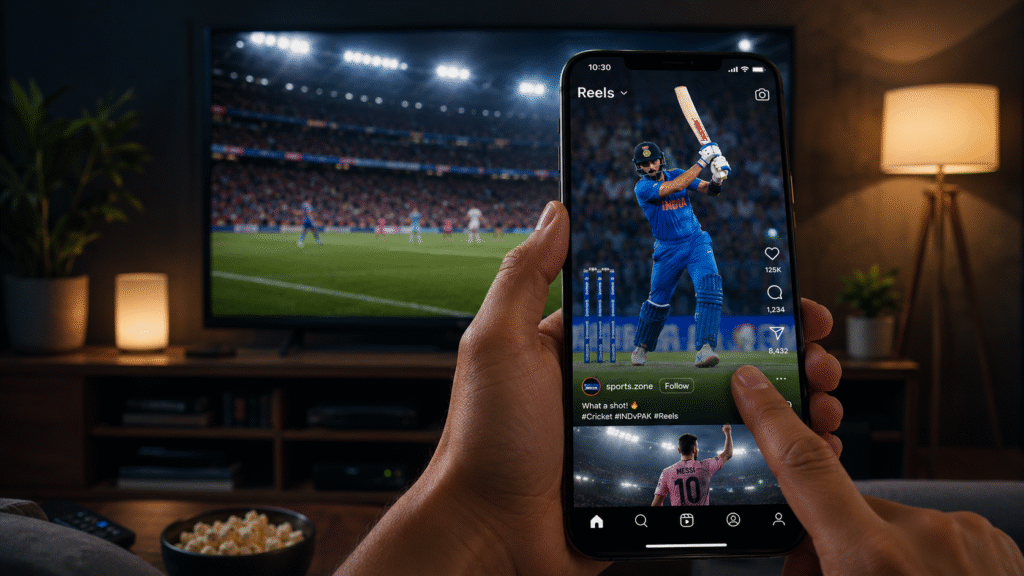
According to the WSC Sports 2025-2026 Generational Fan Study, which surveyed 1,050 US fans across generations, Gen Z’s fandom is fundamentally social and personality-driven. For Gen Z, loyalty is built around athletes, not teams. They follow people, not organisations. Their fandom forms through short clips, creator content, and social trends, not through tradition or geography.
GWI’s Global Sports Trends research confirms the scale of this shift. Over 72% of Gen Z sports fans use social media to follow or consume sport, and many hop across five or more platforms daily. Meanwhile, 62% of all fans across generations, but Gen Z most acutely, discovered a new team, player, or league through short-form video. The implications are profound. Only 31% of sports fans aged 18–24 watch live sports on traditional TV, compared to 75% among those aged 55 and over. Gen Z is the only age group where the preference for short clips and highlights outranks the preference for live games. And 55% select streaming as their primary sports destination.
| 72% OF GEN Z USE SOCIAL MEDIA TO FOLLOW OR CONSUME SPORT (GWI) | 62% OF FANS DISCOVERED NEW SPORT VIA SHORT-FORM VIDEO (WSC SPORTS) | 38% OF GEN Z HAVE NO FAVOURITE SPORTS TEAM (MORNING CONSULT) |
This is the audience that the sports industry is competing for. The sports that are winning them are doing so not by accident, but because their intrinsic characteristics align naturally with how Gen Z wants to experience the world.
| For Gen Z, the athlete is the team. The clip is the game. The community is the stadium. Sports that understand this are growing. Those that don’t are quietly losing the next generation of fans. |
The Sports Capturing Gen Z in 2026
Drawing on data from WSC Sports, GWI, EY’s Sports Engagement Index, Project Play’s State of Play 2025, Nielsen’s Tops of Sports 2026, Morning Consult, and Ai Master Pedia’s comprehensive analysis of American Gen Z sports preferences, here is a definitive picture of who is winning, and how.

| 01 🏀 BASKETBALL (NBA & WNBA) [DOMINANT] |
| Basketball is the undisputed champion of Gen Z sports. It is the perfect Gen Z sport: fast-paced, personality-saturated, culturally integrated, and endlessly clippable. The NBA has become a masterclass in social-first content strategy, maintaining 24/7 fan engagement through memes, athlete stories, and highlight culture long after the final whistle. The WNBA’s explosive growth, powered by Caitlin Clark, Angel Reese, and a generation of Gen Z women who see themselves represented on court, has added an entirely new dimension to basketball’s appeal. Gen Z’s values-driven fandom (inclusivity, authenticity, social justice) found a home in basketball before any other major sport did. 📊 NBA is the #1 sport among American Gen Z. WNBA viewership up 170% on ESPN in 2024. 47% of Gen Z identify as at least casual NBA fans (Morning Consult). |
| 02 ⚽ FOOTBALL (SOCCER) [SURGING GLOBALLY] |
| Football, the global game, is surging among Gen Z ahead of the 2026 FIFA World Cup, which will be hosted across the USA, Canada, and Mexico. GWI data shows 74% of sports fans use social media for football, making it the most socially consumed sport on earth. For Gen Z specifically, football’s appeal is amplified by its global cultural identity: supporting a club like PSG, Real Madrid, or Manchester City is as much a cultural and aesthetic statement as it is a sporting allegiance. The 2026 World Cup, with its tri-nation format and 48-team competition, is projected to be the most-watched sporting event in history, and Gen Z will drive much of its social media footprint. 📊 74% of sports fans use social media for football (GWI). MLS avid fan base grew 45% between 2012 and 2022 among 18-34s. Soccer is the #2 sport capturing American Gen Z (Ai Master Pedia 2026). |
| 03 🏃 RUNNING & FITNESS CULTURE [GEN Z’S PERSONAL SPORT] |
| Running has undergone one of the most dramatic repositionings in sports in the last five years, from solitary discipline to Gen Z social identity. The EY Sports Engagement Index 2025, which surveyed 18–24 year-olds in the UK, found running ranking second only to football for Gen Z participation and engagement. This is not running as exercise. It is running as community, content, and self-expression. Run clubs in London, New York, Mumbai, and Seoul have become the new social scene for urban Gen Z. GWI’s research notes that 82% of Gen Z sports fans identify as health, fitness, and beauty enthusiasts, and that they are 25% more open to discussing mental health than older generations, giving sport a wellness dimension that running exemplifies perfectly. 📊 Running ranks #2 for UK Gen Z engagement (EY Sports Engagement Index 2025). Global running participation among 18-24s grew 28% between 2020 and 2025. Run clubs are now cited as a primary social activity among urban Gen Z globally. |
| 04 🏈 FLAG FOOTBALL (THE EXPLOSIVE NEWCOMER) [FASTEST GROWING] |
| Flag football is perhaps the most striking participation story in Gen Z sport. Project Play’s State of Play 2025 report identifies girls’ flag football as one of the fastest-growing youth sports in America, a remarkable development in a sport historically associated almost exclusively with male participation. Boys’ volleyball is showing similar explosive growth. These participatory surges reflect a broader Gen Z trend: the preference for lower-contact, more inclusive formats of traditional sports. The NFL’s heavy investment in flag football as an Olympic sport, it will debut at the 2028 Los Angeles Games, combined with serious global development programmes, means flag football’s Gen Z moment is only just beginning. 📊 Girls’ flag football is one of the fastest-growing youth sports in the US (Project Play State of Play 2025). The sport will debut at the 2028 Olympics. NFL Flag programmes active in 17 countries globally. |
| 05 🎮 E-SPORTS & COMPETITIVE GAMING [UNIQUELY GEN Z] |
| E-sports has more Gen Z fans than any other generation, by a significant margin. One-third of Gen-Zers are at least casual e-sports fans, a higher share than those who follow the NHL or MLS. What distinguishes e-sports is that it was built, from the ground up, for Gen Z consumption: livestreamed natively, clipped constantly, accessible globally, and built around individual streamer personalities rather than institutional team loyalty. The overlap between e-sports fandom and traditional sports fandom among Gen Z is also significant, e-sports often serves as the gateway through which Gen Z discovers traditional sports, not the competitor to them. 📊 35% of Gen Z are e-sports fans vs. 19% of adults overall. E-sports has more Gen Z fans than NHL or MLS. DRL’s TikTok following grew from 500K to over 5M in one year (Morning Consult / DRL data). |
| 06 🏎️ FORMULA 1 [THE STREAMING CONVERSION STORY] |
| Formula 1‘s transformation into a Gen Z cultural phenomenon is the most studied audience growth story in sports marketing of the last decade. The Netflix Drive to Survive effect is real, documented, and replicable, it turned a technically complex, historically inaccessible sport into a personality-driven soap opera that Gen Z consumed voraciously on streaming. EY’s Sports Engagement Index ranks F1 among the top five sports for UK Gen Z (18–24). The sport’s aesthetic, fashion, music, celebrity, drama, aligns perfectly with what Gen Z expects from entertainment. GWI notes that F1 has turned race weekends into destination events, with fans travelling internationally as much for the experience as for the sport. 📊 F1 ranks in the top 5 for UK Gen Z sports engagement (EY 2025). Netflix Drive to Survive added an estimated 40M new fans globally. F1 is the #6 most watched sport among Gen Z in the US (Knit survey data). |
| 07 🎾 TENNIS [THE PERSONALITY & LIFESTYLE SPORT] |
| Tennis has experienced a remarkable Gen Z renaissance, one built not on tradition but on personality. Carlos Alcaraz, Iga Świątek, Coco Gauff, and Emma Raducanu have given the sport a generation of globally relatable athletes whose stories Gen Z follows across social media as avidly as they follow the scores. The Feeld RAW Report 2025 (the Hypebae / Feeld study of Gen Z social and dating behaviour) found tennis ranking among the top sports Gen Z associates with social connection, dating culture, and lifestyle identity, a remarkable positioning for a sport long associated with country club exclusivity. Pickleball’s adjacency has also driven new audiences toward tennis courts for the first time. 📊 Tennis ranks in Gen Z’s top sports for social identity and dating culture (Feeld RAW Report 2025). Coco Gauff and Carlos Alcaraz have among the highest Gen Z social media followings of any athletes. WTA signed a $500M, 10-year Mercedes-Benz deal in 2025, the largest in women’s tennis history. |
| 08 ⚡ WOMEN’S SPORT (THE CATEGORY ITSELF) [DEFINING GEN Z FANDOM] |
| Women’s sport is not a single discipline, it is an entire category that Gen Z has adopted as a values statement. WNBA, women’s football, women’s tennis, women’s cricket, across all of them, Gen Z (particularly Gen Z women and Gen Z allies) are the fastest-growing and most passionate fan segments. This is structural, not cyclical. Gen Z’s values around gender equity, representation, and inclusion have found their most authentic expression in women’s sport, and the sports that have recognised this and invested accordingly are reaping significant commercial and fandom rewards. New York Liberty sold a franchise stake at a $450M valuation in 2025, a record for women’s basketball. 📊 WNBA ratings on ESPN up 170% in 2024. New York Liberty valued at $450M in 2025. Girls’ flag football and women’s lacrosse among the fastest-growing youth sports in the US (Project Play 2025). |
| 09 🥊 BOXING & COMBAT SPORTS [THE DARK HORSE SURGE] |
| Combat sports are emerging as a genuine Gen Z phenomenon, one that surprised even industry analysts. Digital Content Next’s “Gen Z Sports Decoded” research (surveying 2,000 US-based Gen Z respondents) found combat sports increasingly dominant among Gen Z male audiences in particular. Boxing’s digital-native promotions (DAZN, YouTube-first fights, influencer boxing) have made it far more accessible and entertaining for Gen Z than the old broadcast-TV model ever did. The Paul brothers’ boxing ventures and the UFC’s aggressive social media presence have brought combat sports into the Gen Z cultural conversation in ways that feel native rather than forced. 📊 Boxing ranks #1 or #2 for in-person sports viewing preference among Gen Z males in several US surveys. UFC events generate among the highest social media engagement per event of any sport. Combat sports are among the fastest-growing viewer categories for 18-24s globally (Digital Content Next 2025). |
| 10 🏓 PICKLEBALL & PADEL (THE PARTICIPATION WILDCARDS) [COMMUNITY FIRST] |
| Pickleball in the US and padel globally have emerged as Gen Z’s community participation sports of choice, accessible, social, low-barrier, and intensely shareable. Pickleball’s participation growth has been extraordinary: from 4.8 million players in 2021 to an estimated 22 million by 2026. It is listed among the top sports for American Gen Z by Ai Master Pedia, and its appeal perfectly captures what Gen Z wants from participation sport: it is easy to learn, fun to post about, social in nature, and requires no long-term commitment. Padel is playing a similar role in Europe, Latin America, and increasingly India, giving Gen Z a sport that feels fresh, not inherited. 📊 Pickleball grew from 4.8M to an estimated 22M US players between 2021 and 2026. It ranks among the top 5 participation sports for American Gen Z. Padel is the world’s fastest-growing sport by court installations globally. |
The India Dimension: Cricket, IPL, and the Gen Z Question
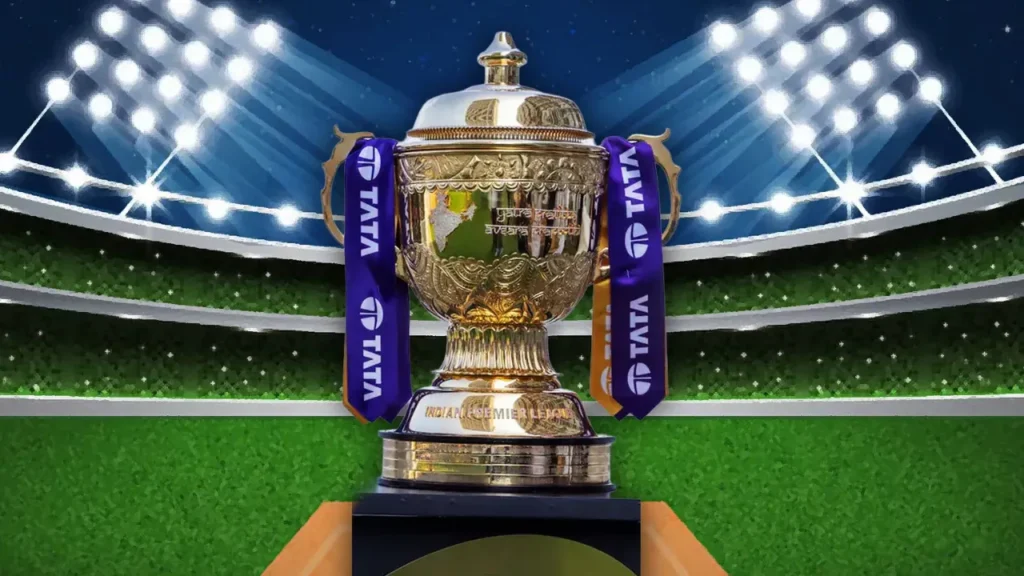
Any global analysis of Gen Z and sport that does not address India is fundamentally incomplete. India is home to one of the largest youth populations on earth, and cricket, specifically the IPL, has historically been the dominant sporting force in the country. But the relationship between Indian Gen Z and cricket is undergoing its own significant transformation.
The IPL’s brand value declined 20% year-on-year to $9.6 billion in 2025, partly as a result of the real money gaming ban that removed the tournament’s “most aggressive sponsor category.” But the engagement picture is more nuanced. Indian Gen Z continues to follow cricket, particularly T20 cricket, which aligns well with the format preferences (short, intense, shareable) that define Gen Z consumption globally.

| INDIAN GEN Z SPORTS LANDSCAPE, KEY DYNAMICS Cricket (T20/IPL): Remains the dominant sport by engagement and cultural identity for Indian Gen Z, but franchise fandom is evolving. Younger fans increasingly follow individual players (Virat Kohli, Rohit Sharma, Shubman Gill) rather than teams, the same athlete-first dynamic seen globally. Football (ISL & Premier League): English Premier League fandom among Indian Gen Z has grown dramatically via streaming and social media. ISL clubs like Bengaluru FC and Mumbai City are building genuine young fanbases. The 2026 FIFA World Cup will be a significant moment for Indian football fandom. Kabaddi (PKL): Pro Kabaddi League was specifically designed for younger, regional audiences and has cultivated genuine Gen Z engagement, particularly in Tier 2 and Tier 3 cities where cricket’s cultural dominance is slightly less absolute. Esports: India’s esports participation is among the fastest-growing globally. BGMI (Battlegrounds Mobile India), VALORANT, and FIFA tournaments have significant Gen Z audiences, though the real money gaming ban has created some turbulence in the competitive gaming ecosystem. Emerging: Badminton (PV Sindhu effect), wrestling, boxing, and athletics are all growing among Indian Gen Z, partly driven by Olympic exposure and a growing national pride in individual sporting excellence beyond cricket. |
Five Reasons the Winning Sports Are Winning
The sports gaining Gen Z are not random winners. They share a set of structural characteristics that align with how this generation lives, values, and communicates. Understanding these patterns is the single most important strategic insight for sports marketers, rights holders, and brands in 2026.

| WHAT THE WINNING SPORTS HAVE IN COMMON |
| ✓ Athlete-first storytelling: The sport gives fans access to personalities, not just results. Basketball’s players are brands. F1’s drivers are characters. Tennis’s stars are global icons. Gen Z follows people before they follow leagues. ✓ Social-native content: The winning sports generate naturally clippable, shareable, reaction-worthy moments, and their organisations have built the content infrastructure to distribute them at speed across TikTok, Instagram, YouTube, and X. ✓ Values alignment: Women’s sport, flag football, padel, the fastest-growing categories share an alignment with Gen Z values around inclusion, equity, access, and mental health. Sports that feel exclusive, traditional, or elitist are losing ground. ✓ Participatory accessibility: Gen Z does not just want to watch. They want to play, or at least feel able to play. Running, pickleball, padel, flag football, the participatory winners all have low barriers to entry and strong community dimensions. ✓ Streaming-first distribution: 55% of Gen Z select streaming as their primary sports destination. Sports available on the platforms Gen Z already use, YouTube, DAZN, streaming services, are dramatically easier to discover and sustain than those locked behind traditional broadcast paywalls. |
| THE MARKETER’S TAKEAWAY Gen Z does not require that a sport have a 100-year history to earn their loyalty. It requires that the sport earn their attention in the feed, their identity in the culture, and their community in the real world. The sports winning Gen Z in 2026 are not the richest or the oldest. They are the most culturally intelligent. |

FREQUENTLY ASKED QUESTIONS
Which Sports Are Most Popular with Gen Z?
Based on 2025-2026 data across multiple studies, basketball (NBA/WNBA), football (soccer), running/fitness culture, and e-sports consistently rank as the most popular sports among Gen Z globally. In the UK, the EY Sports Engagement Index identifies football, running, and Formula 1 as the top three for 18-24 year-olds. In the US, Morning Consult data shows the NFL and NBA as the most followed leagues, with e-sports emerging as a significant rival to established sports for casual Gen Z attention.
Why Is Gen Z Less Interested in Traditional Sports?
Gen Z has not lost interest in sport, they have developed a different relationship with it. Research from the WSC Sports Generational Fan Study and Morning Consult shows that Gen Z prefers short-form content, athlete personalities, and streaming platforms over traditional broadcast schedules. Sports that rely on 90-minute or 3-hour live viewing as their primary fan touchpoint are naturally disadvantaged with a generation that consumes in clips and scrolls rather than scheduled blocks.
What Sports Are Growing Among Gen Z in India?
In India, T20 cricket (especially IPL) remains the dominant sport for Gen Z engagement, though individual player loyalty is replacing franchise loyalty. Football, both the ISL and English Premier League, is growing rapidly among urban Indian Gen Z. Esports, kabaddi (PKL), and badminton are all gaining significant youth audiences. The 2026 FIFA World Cup is expected to further accelerate football’s Gen Z following in India.
How Can Sports Organisations Attract Gen Z Fans?
The sports organisations most successfully attracting Gen Z fans share a common approach: they invest in athlete storytelling and content creation; they are natively present on social platforms (not just broadcast); also they align with Gen Z values around inclusion and authenticity; they make their sport accessible to participate in, not just watch; and they distribute content where Gen Z already is, rather than expecting Gen Z to come to them.
| THE BOTTOM LINE What Gen Z Is Telling Sport, And What Sport Had Better Listen To Gen Z is not lost to sport. They are finding sport on their own terms, through their phones, their communities, their values, and their chosen athletes. The sports that are winning them are those that have accepted this shift without resentment and built accordingly. Basketball did it through culture and star power. Football did it through global identity and social ubiquity. Running did it through community and wellness. F1 did it through storytelling and streaming. Women’s sport is doing it through representation and authenticity. E-sports did it by being built for Gen Z from the very beginning. The losers, and there are some, are the sports that expected Gen Z to find them, to sit through a full broadcast, to build loyalty through geography and tradition the way their parents and grandparents did. That model is not failing because Gen Z is difficult. It is failing because the world changed, and those sports did not. The question for every sport in 2026 is not “does Gen Z watch us?” It is “are we worth watching on their terms?” The answer to that question will define the commercial landscape of sport for the next twenty years. |