The Great Gambling Withdrawal: Betting Ban

Insights & News

Online Betting

In the span of roughly two years, two of the world’s most important sports markets have moved decisively against gambling and real money gaming in sport. The moves are geographically distant, legally distinct, and commercially different in scale , but they point in the same direction. And for every brand, rights holder, agency, and sports marketer operating globally, that direction matters enormously.

The UK’s Premier League front-of-shirt betting ban, effective from the 2026/27 season, strips an estimated £140–220 million in annual commercial revenue from England’s top clubs and removes gambling brands from the most visible piece of real estate in world football. The India’s Promotion and Regulation of Online Gaming Act 2025 (PROGA), signed into law in August 2025, goes further , banning all real money gaming nationwide and effectively eliminating an entire sponsor category that had become the financial backbone of the IPL, cricket, and Indian sport broadly.

Together, these two bans represent the largest single contraction of gambling-linked sports sponsorship revenue in history. And together, they offer a marketer’s masterclass in what regulatory disruption actually creates: not just losses, but vacuums. And vacuums in sponsorship, as history consistently shows, get filled , by smarter brands, with better strategies, at better value. This is not a crisis piece. It is a strategy piece. The question is not whether gambling money will leave sport. It already is. The question is: who is positioned to replace it, what the new commercial landscape looks like, and what global sports marketing strategy needs to become in a post-gambling-dominance era.

Betway Ad in Premier League Games

The Premier League’s decision to voluntarily ban gambling brands from the front of matchday shirts , announced in 2023 and taking full effect from the 2026/27 season , was, in the language of regulators, a proactive measure. In the language of commercial reality, it was a controlled detonation of a £140 million-per-season revenue stream.

There are eight current Premier League clubs with gambling companies as shirt-front sponsors, estimated at £60m per annum. By the time the ban fully took hold, eleven of twenty Premier League clubs carried gambling brands on the front of their matchday shirts , with the collective value of front-of-shirt deals exceeding £140 million per season.

The financial exposure is not evenly distributed. For several clubs, gambling sponsorships account for between 28% and 38% of total commercial revenue. For the so-called big six , Arsenal, Liverpool, Manchester City, Manchester United, Chelsea, Tottenham , the impact is manageable; their commercial infrastructures are diversified enough to absorb the shock. For mid-table and lower-tier clubs, it is a structural threat. The market is already feeling it. Outside the big six, shirt sponsorship offers have dropped by around 50% from a range of between £8 million and £12 million a season. Some clubs have started the season without a confirmed front-of-shirt partner , a situation that would have been unthinkable five years ago.

If the UK’s betting ban is a scalpel, India’s PROGA is a sledgehammer. Where the Premier League restricted where gambling brands could appear, India removed the entire category from existence overnight.

The Promotion and Regulation of Online Gaming Act, 2025 prohibits any app or online platform that offers money-based gaming or related services. It makes no distinction between games of chance and games requiring an element of skill, such as fantasy sports. This single legislative stroke eliminated an industry that invested more than $158 million each year on sports sponsorship, powering events from the IPL to local tournaments in esports and badminton.

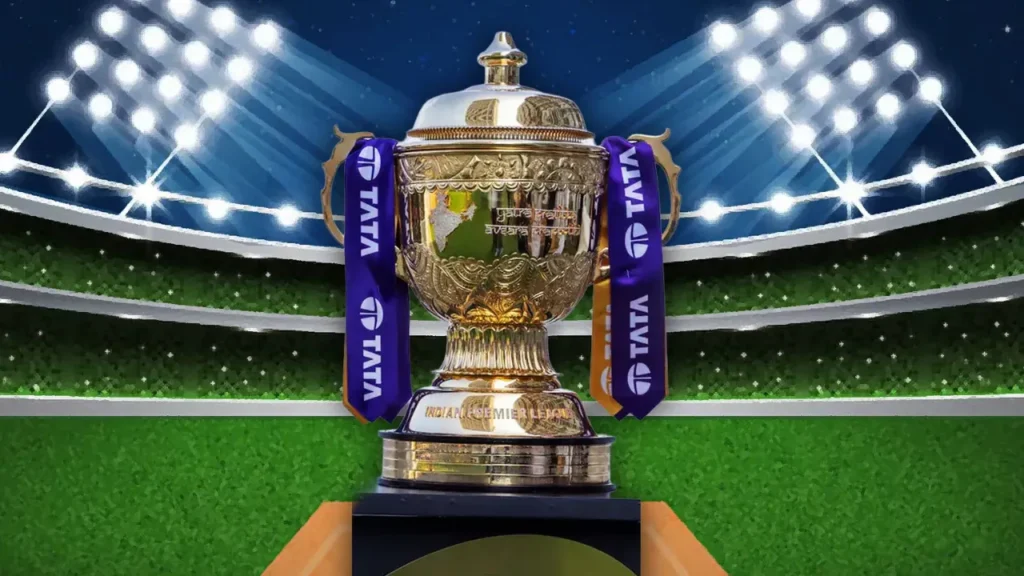
The IPL absorbed the most concentrated impact. My11Circle had secured a five-year IPL sponsorship deal in 2024 worth $66 million. Dream11 ended its IPL title sponsorship worth $14.5 million per year. These were not peripheral partnerships. They were the commercial engines of the tournament’s entire sponsor revenue model. The overall market value of the IPL declined by 20% year-on-year from $12,000 million in 2024 to $9600 million in 2025 , a five-year low, matching the drop seen during the COVID-19 pandemic. The digital advertising market stands to lose between $422 – $527 million annually.

🇬🇧 UK , PREMIER LEAGUE BAN🇮🇳 INDIA , RMG TOTAL BAN
£140M+ Annual front-of-shirt value removed per season$158+ million Annual sports sponsorship investment eliminated
→  Voluntary, self-regulated by clubs collectively
→  Front-of-shirt only , sleeve, LED, stadium still permitted
→  Phased: effective 2026/27 season
→  Estimated 38% drop in shirt sponsorship values
→  9+ clubs entered summer without confirmed front sponsors
→  EFL unaffected , betting brands may migrate downward
→  Government legislation , PROGA 2025 , total ban
→  All real money gaming banned, including fantasy sports
→  Immediate: signed into law 22 August 2025
→  IPL brand value declined 20% year-on-year
→  $840M+ in industry asset write-downs within 90 days
→  Esports and social gaming actively promoted as alternative

Viewed side by side, both bans share an obvious surface similarity: gambling money leaves sport, commercial voids open up, and rights holders scramble. But a deeper reading reveals that the nature, scale, and strategic implications of each ban are fundamentally different , and demand different strategic responses.

DIMENSION🇬🇧 UK BETTING BAN🇮🇳 INDIA RMG BAN
ScopeFront-of-shirt only. All other sponsorship formats permitted.Total elimination of entire category. No RMG brand can operate, advertise, or sponsor.
Market maturityMature, diversified commercial ecosystem. Multiple sponsor categories competing.High-growth market where RMG was the dominant emerging category , the gap is proportionally far larger.
Regulatory driverPublic health pressure + voluntary club agreement. Government legislation threat in background.Hard legislative action by central government under PROGA 2025. No industry consultation phase.
TimelineMulti-year runway. Clubs had since 2023 to find alternatives for the 2026/27 start.Immediate. Contracts terminated overnight on 22 August 2025. No transition period.
Who absorbs itPredominantly mid-table and lower-tier Premier League clubs most exposed.The entire Indian sports ecosystem , IPL, all cricket boards, Kabaddi, Hockey, and grassroots.
Global signal“Gambling in sport has a visibility problem.” , Regulation of presence.  “Gambling in sport has an existence problem.” , Regulation of participation.

This distinction matters enormously for global brands assessing their sponsorship strategy. The UK ban creates a premium real estate shortage , fewer brands can occupy the most visible shirt space, which should increase the value of what remains. India creates a category vacuum , an entire segment of sponsorship spend that needs to find a new home, and quickly.

Economy going down, market gets affected by betting bans

It would be a strategic error to read the UK and India bans as isolated national decisions. They are the two most prominent expressions of a regulatory wave that is building across multiple markets simultaneously.

Spain banned gambling advertising during live sports broadcasts in 2021. Italy introduced sweeping restrictions on gambling sponsorship in sport. Belgium has tightened oversight significantly. The direction is clear, and any global sports marketing strategy that does not price in continued regulatory tightening around gambling is a strategy built on sand. The brands that will win the next decade of sports sponsorship are those already building partnerships designed for a post-gambling, post-controversy commercial landscape , with genuine purpose alignment, authentic audience strategies, and activation programmes that do not depend on category tolerance to sustain them.

£220M
ANNUAL PREMIER LEAGUE COMMERCIAL REVENUE DISRUPTED BY UK BAN
$158M
ANNUAL SPORTS SPONSORSHIP INVESTMENT ELIMINATED IN INDIA
$96B
GLOBAL SPORTS SPONSORSHIP MARKET BY 2030 , GROWING AT 6.6% CAGR

Commercial vacuums in elite sport do not stay empty for long. History is clear on this. When tobacco advertising was banned from Formula 1, technology and financial services brands moved in. When alcohol restrictions tightened in certain markets, energy drink and lifestyle brands expanded. The money does not leave sport. It redirects.

The brands that move early, with genuine activation plans and clear audience strategies, will capture the most valuable inventory at the best pricing. Those that wait will pay premium rates for whatever remains. Here is where the opportunity concentrates, across both markets:

🏦  Fintech & Financial Services
Already emerging as the primary replacement category in both markets. FX traders, neobanks, payment platforms, and crypto-adjacent brands are being actively courted by clubs and leagues. In the UK, CMC Markets is in advanced talks with multiple clubs. In India, fintech brands with mass-market reach are natural successors to RMG’s scale and audience sophistication.
⚡  Energy & Sustainability Brands
Renewable energy companies, EV manufacturers, and sustainability-led brands are finding sports sponsorship increasingly aligned with their ESG commitments. The alignment with clubs’ own sustainability agendas creates authentic partnership narratives that gambling brands could never offer , and that younger audiences increasingly demand.
📱  Technology & Consumer Tech
The technology sector is leading a broader shift toward deeper integration sponsorships , where brands provide real services to rights holders rather than simply purchasing visibility. AI companies, SaaS platforms, and consumer electronics brands are all expanding their sports marketing footprints aggressively across both markets.
🌏  Asian & Middle Eastern Brands
International brands from markets where sports sponsorship is used strategically for global brand building represent a significant untapped pool of demand. Chinese consumer brands, Gulf sovereign-backed commercial entities, and Southeast Asian conglomerates are all actively seeking premium inventory , at the precise moment premium inventory is newly available.
🎮  Esports & Social Gaming (India-Specific)
India’s PROGA explicitly carves out and promotes esports and social gaming. This creates an immediate opportunity: the esports sponsorship market in India is suddenly wide open and under-priced. For new entrants willing to build in a nascent but rapidly growing category, the entry cost is low and the long-term upside is significant.
🛍️  FMCG & Consumer Brands , India Specifically
In India, FMCG giants that were historically outbid by cash-rich gaming platforms now find themselves in a dramatically changed landscape. For brands like Tata, Reliance, Hindustan Unilever, and ITC , with genuine reach, distribution networks, and long-term brand-building mandates , this is a once-in-a-generation opening in Indian sport.

If your brand operates across multiple markets with any sponsorship exposure, you need to know where your partnerships sit relative to the evolving regulatory landscape in each territory. The UK and India bans will not be the last. Spain, Italy, Belgium, and potentially EU-wide frameworks are all tightening. A regulatory audit is no longer a compliance exercise , it is a competitive intelligence exercise.

The removal of gambling brands from premium inventory creates a temporary buyer’s market. Clubs and leagues that depended heavily on gambling revenue are, right now, under real commercial pressure to find replacements , and that pressure creates negotiating leverage. The window of favourable pricing will not last. Once the replacement ecosystem stabilises, rates will normalise at or above their pre-ban levels. Move early.

The temptation to apply a single global template to the post-gambling landscape is understandable but dangerous. The UK ban is a visibility restriction; India is a category elimination. The commercial implications, replacement brand categories, and activation strategies required are fundamentally different in each market. Global brands need market-specific sponsorship activation strategies, not a one-size-fits-all response.

The broader regulatory environment signals that regulators and the public are increasingly scrutinising the commercial values embedded in sports sponsorship. Brands entering this landscape with genuine purpose alignment , not performative greenwashing , are better protected from future regulatory risk and better positioned to build the authentic fan relationships that generate real long-term commercial returns.

Gambling brands were, for all their regulatory complexity, exceptional activators. They understood their audiences, used data aggressively, created engaging content, and built genuine fan touchpoints. The brands replacing them will not win by simply being present , they will win by activating the partnerships they secure with comparable creativity and discipline. Any brand entering the post-gambling sponsorship landscape with a passive, logo-placement mentality will not generate the returns needed to justify the investment.

THE STRATEGIC PARADOX
Both bans were enacted in the name of protecting consumers from harmful gambling behaviour. Both will, to varying degrees, drive users toward offshore, unregulated platforms , where consumer protections are weaker, not stronger. For sports marketers, this is relevant: the bans reduce gambling’s commercial relationship with sport without necessarily reducing gambling itself. The commercial landscape changes; the social issue remains. Brands entering the space carry no residual brand risk from gambling association , but they do carry the responsibility of what they choose to replace it with.

Share This :

Leave a Reply

Your email address will not be published. Required fields are marked *

Category

Empowering Brands to Leverage 
Sponsorships

Copyright @ 2025. All Rights Reserved | Created by The Kika